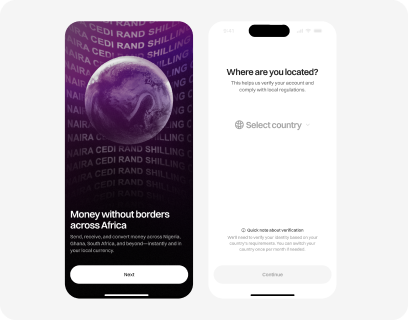
The Evolution of Global Payments: Why Remittance is Becoming the New Financial Infrastructure
For decades, cross-border payments have stood as one of the most expensive and frustratingly inefficient pillars of the global financial system. Whether it is a student sending tuition fees abroad, a freelancer waiting on an international invoice, or a business attempting to pay overseas suppliers, the experience has remained largely the same: slow, opaque, and fragmented. However, we are now entering a transformative new phase. Remittance is shedding its identity as a simple "money transfer" service and is instead evolving into a full-scale global payment infrastructure.
Beyond the "Family Support" Model
Traditionally, the remittance industry was defined by person-to-person (P2P) transfers, typically driven by diaspora communities sending support back to their home countries. In Africa alone, those flows represent tens of billions of dollars annually, with Nigeria consistently ranking as a primary recipient. But the boundaries of this definition are blurring. Today, remittance is converging with global payroll systems for remote workers, cross-border e-commerce, digital wallets, and stablecoin settlement rails. By embedding finance directly into the platforms we use daily, remittance has become the backbone of global commerce rather than just a social safety net.
The Problem of Fragmented Infrastructure
Despite the surface-level innovation of many "shiny" apps, the underlying global payment architecture remains deeply fractured. Banking networks are often siloed by national borders and heavy regulation, leading to settlement times that range from hours to several days. FX conversion remains a "black box" of hidden costs, and many corridors still lean on outdated correspondent banking systems. These challenges are particularly acute in African markets, where limited direct banking relationships and high compliance friction create significant barriers to entry. This is why the most impactful fintech players are no longer just building user interfaces; they are building the infrastructure layers that stitch these disparate systems together.
The Strategy of "Corridor Thinking"
One of the most vital trends shaping modern remittance is the rise of corridor-centric networks. Rather than attempting to build a monolithic global system overnight, successful fintechs are solving for specific routes—such as UK to Nigeria, or the US to West Africa. Each corridor presents its own unique liquidity challenges, regulatory hurdles, and user behaviors. By solving deeply for one route first, companies can create a blueprint for expansion, eventually connecting multiple liquidity partners and payout networks into a unified, reliable engine.
Licensing and the "Trust Moat"
A major bottleneck in scaling these global systems is the complex web of licensing. Regulatory approvals, such as Money Services Business (MSB) registrations and local payment licenses, dictate the geographic reach of a fintech. However, licensing is merely the entry fee. The true competitive advantage comes from the "Trust Moat"—a combination of robust compliance infrastructure, sophisticated FX liquidity management, and reliable fraud prevention systems. Without these foundational elements, even the most well-funded platforms struggle to scale sustainably across borders.
The Future: Embedded Finance and Interoperability
The next evolution of remittance will not be found in standalone apps, but in the background of our digital lives. We are moving toward a world of "Embedded Global Payments," where money movement is a native feature of gig-economy platforms, HR systems, and e-commerce marketplaces. Users no longer care about the mechanics of "sending money abroad"; they care about instant settlement, transparent rates, and multi-currency functionality.
In this new era, the biggest opportunity lies in interoperability. The future will be defined by multi-rail settlement systems—mixing traditional bank transfers with cards and stablecoins—and unified identity layers. Ultimately, the winners in this space will not necessarily be the companies with the most users, but those who have built the most resilient and well-connected networks. Remittance is no longer just moving money; it is redefining the very architecture of global trade.